Saturday, December 12, 2009

Osteoporosis

Can you fracture a bone by sneezing?  If you have advanced osteoporosis, then the answer is yes.  Simply put, osteoporosis is bone loss, and low bone mass can lead to fractures, especially of the hip and vertebral column.            

Let’s take a closer look at the anatomy of osteoporosis.  A cross section of bone is usually comprised of a ring thick, strong, cortical, or compact bone, and the lighter trabecular, or spongy, bone that is essentially a collection of struts and arches.  The spongy bone normally provides strenth without adding a lot of weight.  Osteoporosis affects both types of bone, opening and connecting the spaces in spongy bone until it lacks mechanical strength, and eating into the normally dense compact bone.  In severe cases the outer ring of compact bone is breached. 

While there are no simple symptoms of porous bones, there can be disastrous results from this disease.  The risk factors are often simple things, such as being a woman, or being Caucasian, Asian, or Hispanic/Latino, although African Americans are also at risk. Women are more prone to fractures than men in general, because they tend to have lighter bones to begin with. Older age, family history of osteoporosis, self-history of broken bones (especially hip fractures), being small and thin, and men and women having low levels of estrogen or testosterone may be risk factors you cannot control. Young women athletes with irregular menses may be at elevated risk as well. The sex hormone estrogen normally inhibits the activity of bone reducing osteoclasts. Menopause reduces estrogen levels, allowing the osteoclasts to kick into dangerous overdrive.

Risk factors you can change include: poor diets that lack calcium and vitamin D or have excessive amounts of protein, sodium and caffeine (including that found in soda); being inactive; smoking, which also reduces estrogen levels; drinking alcoholic beverages to excess, and taking certain medications such as steroid medications, some anticonvulsants and others.  Certain diseases and conditions such as anorexia nervosa, rheumatoid arthritis, gastrointestinal diseases and others can also lead to an increased risk of osteoporosis. 

With all these risk factors, and a lack of symptoms until something breaks, how can you know in advance if you are at risk for fractures from osteoporosis?  You can see your primary care physician for a Bone Mineral Density (BMD) test. Studies indicate that there is a strong correlation between low bone density and risk for a fracture in the near future.  BMD tests can be performed a few different ways, but there is some risk of getting a false positive with this type of test.   A more detailed osteoporosis test lab workup would include a variety of tests including blood and urine tests for several hormones, phosphate, and calcium levels.  These tests determine whether osteoporosis may be caused by a secondary disorder such as renal or hepatic failure, anemia, acidosis, hypercalciuria, or abnormal calcium or phosphate levels.  Another test can check levels of bone building osteoblasts.  Tests for vitamin D deficiency may also be recommended. 

Your test results may indicate that you have a normal bone density, or that you are suffering from lower bone density that can fall in a range from the milder osteopenia to full blown osteoporosis.  By itself, osteopenia does not indicate a loss of bone density.  Rather, you may simply have always had less dense bones!  Like osteoporosis, osteopenia is lower than peak bone density.  Osteopenia may be caused by a variety of medical conditions.  If you are diagnosed with osteopenia, your doctor may recommend that you start taking precautions to inhibit the onset of osteoporosis.  These are often the same things you would do to combat the effects of osteoporosis, discussed next. 

While no cure for osteoporosis exists, the good news is that there are treatments available.  Most are for postmenopausal women, or for men.  Women who are no more than ten years beyond menopause may choose to take estrogen supplements.  Anyone undergoing treatment for osteoporosis should get additional testing annually to check progress.  A better idea is to prevent osteoporosis early in life.  A brief scan of the risk factors will indicate a few suggestions: get plenty of calcium and vitamin D; do not smoke; do not drink to excess.  Regular weight bearing exercises will increase your bone density, and muscle-strengthening exercises will help, too.  Drinking fluoridated water can help strengthen your bones.  Preventative steps are especially important for children and people under thirty years old, because the bones are still developing quite a bit until then.  If you get a BMD test early on, you will be in a better position to determine if you need to change your habits or begin taking medication. 

Calcium plays a strong role in the remodeling of bone structure.  Its presence inhibits the release of parathyroid hormone, or PTH.  PTH is released when blood calcium levels are low, which stimulates osteoclasts to break down bone and release stored calcium.  (Calcium levels must remain high enough in the body to participate in muscular contractions and nerve impulses.)  Calcium is readily available in a variety of food sources, from dairy products and vegetables to nuts and grains.  While calcium supplements are available, not all are off sufficient quality to be beneficial.  If you are trying to add more calcium to your diet, it is best to take in calcium at more than once time during the day, because the body immediately discards surplus calcium.  Dietary protein and caffeine can negligibly increase the loss of calcium through urination. People with kidney problems must be careful of their calcium intake, however, as excess calcium can lead to the development of kidney stones. 

Vitamin D is paired with calcium in the recommendations as it enhances adsorption.  One of the best ways to get an adequate intake of vitamin D is to spend some time in the sun without sun block every day.  In cases where this is not practical for medical or geographic reasons, vitamin D fortified foods or vitamin D supplements can be consumed. 

What sort of weight bearing exercise is required to have an impact on bone health?  It can be as simple as walking!  A walking program can be instated at almost any age, and is useful before and after diagnosis of osteopenia or osteoporosis.  Lifting weights and participating in Tai Chi are also recommended activities. Our bone structure is constantly changing in response to stimuli.  Thus, weight-bearing exercises tell your bones that you need stronger bones to resist the effects of gravity. When your workout includes muscle-strengthening exercises, the bones respond to bulkier muscles by becoming stronger themselves. 

In general, you can prevent the onset of osteopenia or osteoporosis by eating well, maintaining healthy habits, and getting load-bearing exercise such as walking from a young age.  Lacking things that inhibit osteoblasts from working or having too many things that encourage osteoclasts causes an overall loss of bone density over time.  Risk factors for osteoporosis are well known, and there are a variety of tests to diagnose the condition.  There are various things you can do to treat osteoporosis.  Treatment included lifestyle changes as well as medicinal approaches.  Osteoporosis prevention and testing should become a part of your complete medical checkup. 

References

Arnheim, Daniel D., and William E. Prentice. Principles of Athletic Training, 10th ed.. New York: McGraw-Hill Higher Education, 2000.

"Bone anatomy in osteoporosis". Up to Date Inc.. November 2, 2009 .

Marieb, Elaine N., and Katja Hoehn. Human Anatomy and Physiology, 7th ed.. New York: Pearson Education, Inc, 2007.

"Ossification: An Introduction to Bone Formation, Growth, and Repair". Province of British Columbia Ministry of Advanced Education, Training and Technology . November 2, 2009 .

"Osteopenia - Overview". Web MD, Healthwise, Incorporated. November 3, 2009 .

Ott, Dr. Susan. "Osteoporosis and bone physiology". University of Washington Department of Medicine. November 2, 2009 .

"Osteoporosis Fast Facts". National Osteoporosis Foundation. November 2, 2009 .

Thomasen, Eivind, and Rachel-Anne Rist. Anatomy and Kinesiology for Ballet Teachers. Alton, Hampshire: Dance Books, Ltd, 2005.


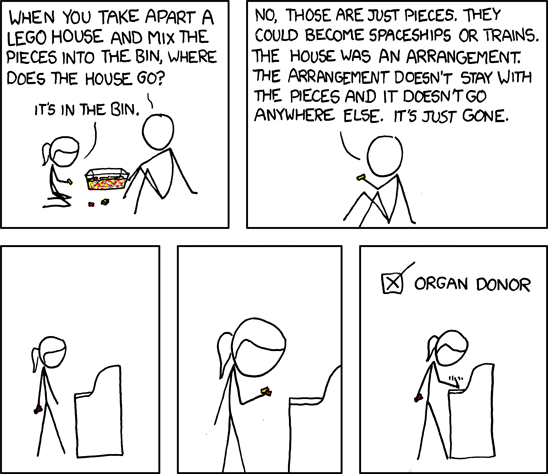

Saturday, December 5, 2009

xkcd: Lego


This xkcd webcomic reminded my of my April 2009 whole body/ organ donation blog!


Botox, Baby!

So here is the deal with not giving honey to a baby under 1 year old. It is not an allergy precaution, so don't think that you can give it to them just because no one in your family has an allergy!  Honey contains Botulism endospores; bees pick it up from dust when they are collecting pollen.  Babies are susceptible, as well as people who have had a long course of antibiotics, so they need to avoid eating honey as well.  (Unpasteurized corn syrup is also being named as a source of botulism, so follow the same precautions.)

The diagnostic symptoms of Botulism include dizziness, dry mouth, blurred vision, and paralysis.  There are additional unpleasant symptoms that also occur between 8 and 36 hours after eating contaminated food.

Clostridium botulinum, the causative agent, is an anaerobic bacteria; it needs an airless environment to thrive, which is why canned foods carry a danger of botulism.  It has endospores, which are essentially really, REALLY tough little cells that can survive where normal bacteria would be killed.  C. botulinum produces a toxin, and that is what makes us sick.  The toxin is called Botox.  Yes, the same stuff rich people pay to have injected into their faces.  They use the paralytic function of the toxin to paralyze the muscles in their faces, which stretches out the skin above the muscle and smooths out their wrinkles.  (The cosmetic use was discovered by accident when they started using Botox to treat people with muscle spasms in the late 1980's.)

So you might be wondering if Botulism is dangerous after all.  Yes!  Botox is one of the most powerful neurotoxins!  It takes as little as 90 nanograms to kill a 90 kg (200 pound) person.  That is far less than one ounce.  (90 nanograms = 3.17465658 × 10⁻⁹ ounces)  Once ingested, Botulism toxin binds to your nervous system, then attacks your motor nerves by blocking neurotransmitter function.  That's the cause of the paralysis.  Their are also risks of complications from using injected Botox, up to and including death.

C. botulinum is naturally found in soils and aquatic sediments (beware of drinking untreated water), as well as non-acidic canned foods, honey, and corn syrup.  Contaminated canned foods tend to bulge, or may smell bad.  Don't eat it if you suspect it may be contaminated, and don't give even a tiny bit of honey to a baby or someone who has been on antibiotics for a long time.

Make no mistake, honey IS good for us- if we have a normal, healthy immune system and digestive tract.  We have normal flora (think GOOD bacteria) which protect us.  Babies don't develop their normal flora until they are 6 months to a year old.  People on antibiotics kill off their normal, good bacteria along with whatever bacterial disease they are trying to rid themselves of.  So the tiny amount of spores and Botox in honey and corn syrup is enough to make these groups very sick.  The comparatively larger doses of Botulism toxin in contaminated canned foods is enough to make a healthy adult sick, even with our protective normal flora.

You can prevent adult cases of Botulism by properly sterilizing and sealing canned foods, and heating foods to 100 degrees Fahrenheit for 15 minutes during normal cooking.  If you suspect a case of botulism, call 9-1-1 and get to the hospital emergency room!

Treatment includes getting an IV antitoxin as soon as possible.  This helps to neutralize the toxin circulating in your bloodstream.  Gastric washing may be required, as well as surgical tissue removal.  This helps to remove any unabsorbed toxin.  If the paralysis has moved into your respiratory system, you may need an artificial respirator.  Recovery from botulism is a very slow process.

Wednesday, September 2, 2009

Paulings Pleated Sheets

Linus Pauling- a figure to be respected.  Two Nobel prizes, one in Chemistry, the other the Peace prize.  He developed the concept of electronegativity and used X-Ray Crystallography to to research crystal and protein structures, including the Alpha Helix and the Beta Pleated Sheet.  Yeah- a real bigwig in the history of science.  (Want to know more?  Click here.)

My Microbiology teacher (Dr. B.) had the gall to CHALLENGE Pauling on the structure of Beta Pleated Sheets.  Here's how he told it:  Dr. B was in a lab with a group who were studying secondary protein structures. At some point, someone placed their spiral bound notebook on the overhead projector, which was on.  The spiral binding (structured like an Alpha Helix) threw a shadow up which resembled the observable pattern of the (then theoretical) Beta Pleated Sheet.  "Ah ha!" thought Dr. B, "there is no Beta Pleated Sheet after all- it is only a projection of an Alpha Helix."  Pauling came in to work with the group, and Dr. B. (he hides his face in shame as he recounts the story) argued with Pauling over the structure.  Needless to say, Dr. B. was proven incorrect, and Chemistry and Microbiology students the world over now learn both structures. 

Here's a picture of primary through quaternary protein structures from a Wikipedia article for those who are less familiar with the shapes:

Wednesday, August 26, 2009

Welcome Back to Science!

After a summer of Nutrition and Statistics, I am rejoining the world of Science and Health studies with Physics, Microbiology, and First Aid & CPR.

I especially enjoyed my first day of Physics, when my teacher spent about 10 minutes covering the basic laboratory introduction, and then ended class- before it began!

So the rest of the story is that lecture precedes lab, and he ended lecture early. Since so many of us are also in his lab, he opened up the lab early and covered the introductory information with us so we wouldn't have to wait around. He planned to cover the info again with the folks who showed up at the regular start time.

I am lucky that my microbiology teacher is out on maternity leave, so we have a substitute while she is away. Not that I have heard anything but good things about her- I hear she is tough, but fair, and that class is fun and interesting. So why am I lucky? Her replacement is a Professor Emeritus. He was HER teacher. He set up the science department at Tidewater Community College. His specialty was Tropical disease. He has tons of experience teaching various science classes, but his favorite? Microbiology.

After a year and a half of Biology and Anatomy, I thought I knew how to use a microscope. Not so! The Doctor spend a good 45 minutes covering the parts of the microscope, and teaching us a methodical way to achieve near perfect focus right away.

Yes, the Doctor is abrupt. He doesn't always hear when someone calls out the correct answer. Sure, he forgets to advance the PowerPoint slide as he lectures. And he is willing to call people out for having their cell phones in class. No, not everyone likes him much. I, however, am thrilled with his expertise, experience, anecdotes, clarity, and focus.

~<->~<->~<->~<->~<->~<->~<->~<->~<->~

Here is how we started Microbiology today:
There is no such thing as life.

Think about it.

. . .

Can you pick up life and hand it to someone? Can you quantify it?

No.

You can point to something that is living- it a living organism, or being. You can pick up something that is alive. You can measure something that is alive in any number of ways, but it is not, itself, LIFE.

Rather than being a tangible thing, what we generally refer to as "Life" is a conceptual construct.  

Monday, May 11, 2009

The Void

Exams are done. No papers due. No projects to work on. No lab reports, no homework, no concept maps, no study groups, no notes to read, no essays to memorize.

I have no idea what to do next.

There are a million things I have not been able to do- books to read, cleaning to do, movies to watch. But right now I feel this massive empty void, because I don't have any specific things I have to do next. The immense pressure is gone, but I kind of MISS it right now!

I'd love to go enjoy the weather with my new found freedom, but it's cold and wet and gray. I don't have any money, because I missed a lot of work during the last few weeks for exams and while I had the flu. I did dig up some left over gift cards, holiday presents from my students and their parents, so I had a free lunch at Panera Bread yesterday (while in the last throes of anatomy study) and a free dinner from Borjo Coffeehouse after work tonight. I have enough left for one more free/ cheap meal at Borjo.

Good news though: relief is coming on all counts. I am working a lot this week, and summer school starts next Monday. Only two classes, both online: Statistics, and Nutrition. Let the studies recommence!

Friday, May 8, 2009

Testy

So in the natural course of things, it became test time once again. Unfortunately, I have the kind of teachers who prefer a cumulative Final, with the final lecture test happening just before it. I also had a Faerie Festival to work right in the middle of final lecture tests and final exams. I also came down with the flu during the first day of that three day festival. I drove 5 hours to PA on Friday, developed a major sore throat while working that afternoon, felt bad working on Saturday, and went home early on Sunday. I took closer to 7 hours to get home, because I stopped at several rest areas to nap and study- I simply could not stay awake for long.

The flu was a major drawback. I had one anatomy test, one chemistry final and one biology final to study for from my bed. I also was asked to stay home from teaching at the dance studio during the borderline end of my illness, to make sure I did not infect the children right before the recital. I needed to stay home though- to rest, and to study. I did get an A on my Monday anatomy test and in my chemistry course. Biology final was this morning at 8am.

I had previously rescheduled my biology final from Tuesday to Friday (so I'd have more time to study chemistry). I've never rescheduled a final exam for a later day, so I was nervous that something would go wrong. Sure enough, when the teacher walked in he looked surprised to see me, and asked why I was there. I reminded him that I had asked to reschedule my test and that he had okayed it. Turns out, I had an A in the class even without taking the final, so he thought I was going to skip it. (When I had asked him about that option two weeks ago he said to just take the final. Apparently he had not done the math yet at that point.) So I did NOT take the final, and I have an A in biology! I wish he had told me earlier- I could have used the time I spent studying biology for studying anatomy, or for sleeping in this morning- I am ALMOST healthy, but need a few more days to feel normal again.

So, let me know if you'd like me to diagram the carbon or nitrogen cycle for you, or describe important features to keep in mind when designing a nature preserve. In the mean time, I will start to focus on anatomy, my final final.

I made a quick video in honor of not having to take my biology final:

Wednesday, April 22, 2009

C-Fern Lab Report


I have been swamped with work as the end of my chemistry, biology, and anatomy courses approaches!

In lieu of a new Blog post, I am publishing my lab report for the C-Fern experiment. Enjoy! (My baby sporophytes are thriving happily in their water bottle terrarium!)

Interested in learning more about C-Ferns? Follow this link.


I. Description of Observations

a. First Period (Day 0)
On the first day of the C-Fern experiment we used pipettes to transfer spores (in solution) from their original container to prepared petri dishes with agar growing medium. Using the dropper, we placed three drops onto the agar, and then used a sterile spore spreader to distribute them across the surface. With our dish labeled and placed into the plant receptacle, we were done.

b. Second Period (Day 5-7)
By the second lab period the spores had begun to grow. We had some of different sizes and shapes, but most were similar to the “mitten hand” or heart shaped silhouette. This lab day was primarily about observation and identification of recognizable structures, such as rhizoids.

c. Third Period (Day 10-14)
The third lab period was the most exciting! On this day we used a mere five drops of sterile water to flood our gametophytes and induce sexual reproduction. At first nothing seemed to happen, but with a better-focused microscope it was possible to see improbably small dark dots whizzing around the dish. These sperm were using water to make the arduous trek from the antheridia to the archegonia. They appeared to dance about with a meandering pathway, but ultimately wound up figuring out where to go. In a few minutes the activity slowed down as most of the sperm that had been released found their way to the archegonia.

d. Fourth Period (Day 19-21)
By the fourth lab period, most of the gametophytes had eggs that had been fertilized by sperm. It was possible to add more sterile water and release a few more sperm to make their liquid voyage, but most were already safely docked in the archegonia. From this point forward we hydrated and observed the growth of the sporophyte plants. I am very proud of our baby C-ferns! I placed some of the plants I took home into a small water bottle terrarium, and am keeping them moist with deionized water. My sporophytes have continued to slowly grow in size.

II. Description of the Fern Life Cycle

We began our observation of the fern life cycle with haploid spores. These single cells germinated and became multicellular gametophytes. The gametophytes, in turn, produced male and female gametes (sex cells). With the presence of water it was possible for the male gametes, sperm, to leave the antheridia and travel to the eggs in the archegonia. There fertilization was completed, and the diploid sporophyte was born. Once mature, the sporophytes are capable of producing the haploid spores via meiosis, completing the cycle.

III. Questions regarding the experiment

a. How do sperm find and reach the egg in the archegonium?

The sperm uses chemotaxis to locate the archegonia, and it requires water so that it can swim to reach the eggs.

b. Why do gametophytes die after the sporophyte starts to grow?

The young sporophytes predate the gametophytes as a nutrient source when they are first developing.

c. What factors would influence self-fertilization of hermaphroditic (bisexual) gametophytes versus cross-fertilization from the male gametophyte in the archegonium on the hermaphroditic gametophyte?

Cross-fertilization is encouraged by the separation of antheridia and archegonia on the hermaphroditic gamete. Self fertilization might be more likely to occur in the absence of male only gametophytes, or if individual hermaphroditic gametophytes were isolated.

d. What are the genetic consequences of sporophytes produced from self-fertilization or hermaphroditic (bisexual) gametophytes versus cross-fertilization from the male gametophyte in the archegonium on the hermaphroditic gametophyte?

Subsequent generations of self-fertilized plants would lack genetic variation, leading to potentially damaging mutations. The descendants of cross-fertilized gametophytes would have a richer genetic library from which to select traits for long-term survival.

Thursday, April 9, 2009

Body/ Organ/ Environment Donation

 I was chatting with a fellow dance teacher this evening, and laid out my developing plans for the disposal of my body after my death. (Yes, sometimes these things come up in conversation!)

Here's the plan: 1) whole body donation if possible, preferably to an academic setting; 2) organ donation (if whole body donation is not possible); 3) cremated remains from organ donation (or if organ donation is not possible) added into artificial coral reef structures. Oh, I almost forgot: a fun party with a video/ slideshow picture tribute. I'd like to know that my loved ones will celebrate my life!

I just downloaded forms from Science Care, an accredited company for whole body donation. There is a clause in there that specifies my remains would not be put on public display. That reminded me of the Bodies Exhibition. Hmmm. . . now there are some truly expert dissections, and what a way for a performer to keep an audience!

I've been an organ donor since getting my first drivers license. You can find some more information on becoming a donor at OrganDonor.gov or at Donate Life America's website (look for their flags flying across the country during their "Flags Across America initiative" this month).

I have also requested information from Eternal Reefs. (I chose the treeless download option, rather than having them mail me copies of the documents.) They have a "Pearls are for Pets" pet cremation program, too!

~~~~~~~~~~~~~~~~~~~~~~~~~~~~~~~~~~~

Update 4/12/09: I asked the Eternal Reefs Company about options concerning organ and whole body donations, here is their reply:

"Thank you for your interest in Eternal Reefs.

We frequently have Eternal Reefs for people who have either donated organs
or their bodies. In the case of those who donate their bodies, I believe
that all of the medical schools have the bodies cremated when they are done
using them and will offer to return the remains to the family or to scatter
the remains on the families behalf. If there are schools that do something
different I am unaware of them. You could instruct your family and the
school you are donating to that this is what you would like to have done
with your remains.

We also cast Eternal Reefs without any remains at all if the family has done
something else already, or if the person had been buried but liked the idea
of having a living memorial that would benefit future generations.

Please let me know if you have any other questions."

Thursday, April 2, 2009

You Know You're A Science Nerd If. . .

It's been mainly more of the same this week. Had an Anatomy Test Tuesday. Burning CD's for my ballet and tap students as they bring them in for me. Quiz in Anatomy lab tomorrow. Chem test coming up next week on carbohydrates, lipids, and proteins. But I am going to take much of this weekend off to relax and actually spend some time with my beloved!

You know you are a science nerd when you are walking through downtown streets wearing your Starfleet Academy t-shirt and carrying a petri dish in your hand which contains baby ferns that you germinated in a biology lab.

You also know you are a science nerd when you start admiring your KitchenAid mixer for its resemblance to a microscope! (You even carry them in a similar manner. Please tell me you see it, too!)

Tuesday, March 31, 2009

unManic Monday

Monday was a relatively easy and pleasant day! I arrived for anatomy lecture a bit early, which gave me time to start working on my chemistry homework for Wednesday. We finished discussing the physiology of digestion (for Wednesday's test), and started on the anatomy of the kidney, for the section on the urinary system. And thank goodness, because our class is so far behind, lab was confusing last Friday (it didn't help that I was not feeling well that day).

We finished discussing proteins in chemistry lecture (for NEXT Wednesday's test), and started discussing enzymes in more detail. My professor cancelled the chemistry lab for today. Something is going on with him this semester- he has cited home trouble and illness for a few homework assignments and class notes which he posted late, as well as canceling lab once already this semester.

The canceled lab did allow me to go to open anatomy lab much earlier than I had anticipated. I spent quite a bit of time communing with the cross section of the kidneys (model only, didn't look at wet tissue this time.) I did not examine the other organs (intestines, bladder, etc.) because they should be a little bit easier to learn via Dr. Allan Forsman of East Tennessee State on iTunes U (he is such a wonderfully thorough and clear instructor) and on paper.

I feel as though I spent my afternoon goofing off, though in reality I studied anatomy and biology and a little bit of chemistry, all interspersed with a fair amount of online play. I just didn't have the usual rushed and overworked sensation. I actually took my anatomy book outside and sat in the warmth of the last of the sun outside my apartment. I cannot wait for the real return of true warm weather!

Sunday, March 29, 2009

Digestion in the Sun

A typical weekend for the ambitious science student: lots of studying!

Actually, I substitute taught 5 hour long ballet classes in a row yesterday as well, ranging from 3 year olds to preteens. No break in between! I kept it light to conserve my energy, a little bit of technique practice interspersed with lots of fun dance songs and games. Every class also started with the necessary recital practice, because the recital is in May. I started off the day by getting a large container of orange juice, and sipped frequently to constantly fortify my energy reserves. By the end of my 5 hours I didn't really feel any more tired than I do after my usual 3 hours in a row, because I usually teach after a long day of classes. My voice was a little more tired, but not as sore as it is in the Fall, when I first go back to teaching after summer break.

I did manage to get some more sleep this weekend. I actually quit studying at about 9:40 Saturday night, and watched a couple of episodes of Big Ideas for a Small Planet on my computer via iTunes before falling asleep. (I do not own a television.)

Sunday was a morning to sleep in, complete chores, and study anatomy (digestion) out in the sun. I love the return of warm weather!

My health is fine, my new theory is that I may have suffered from a touch of temporary lactose intolerance. I had an extra large serving of pudding for dessert before bedtime. Symptoms can include "nausea, cramps, bloating, gas, and diarrhea." I never used to be lactose intolerant, but my dairy consumption is not what it once was. Some sources claim that an adult can slowly reintroduce dairy into their diet to acclimate themselves. Maybe that ought to be on my agenda!

Friday, March 27, 2009

Appendicitis

Warning: This Blog contains graphic details about personal body functions and the symptoms of appendicitis.

I awoke last night with severe abdominal cramping in my right lower quadrant- a feeling unlike other types of cramps or gas that I have ever experienced. I realized that I needed to get to the toilet to void my bowels in a hurry, and that I felt nauseous. I was still more than half asleep, or I would have been much more worried. In the morning I overslept, but decided to pay to park in the parking garage by the science building, rather than parking in the more distant student parking lot, thus avoiding the slightly more lengthy commute and shuttle bus ride. With my new found spare time I decided to actually eat something for breakfast before class, which is an extremely rare occurrence. I was only able to force down half a container of yogurt, which also should have worried me more than it did. I took Pepto Bismol to guard against diarrhea and nausea during class.

In class I performed well enough on my anatomy lab quiz, considering I slept through the hour of morning time I had been planning on reviewing histology of the liver, stomach, and pancreas. My right side still hurt. I felt very tired (reasonable, after all my long hours of studying), and a little nauseous still. We covered the lower abdominal region, intestines, and appendix in class. Appendix. . . Appendix!

I left class early to be able to go home before work, still feeling physically bad, now finally feeling worried. I Googled burst appendix, appendicitis, and found some really helpful resources, like this one. Uh oh.

"The abdominal pain usually
  • occurs suddenly, often causing a person to wake up at night
  • occurs before other symptoms
  • begins near the belly button and then moves lower and to the right
  • is new and unlike any pain felt before

"Other symptoms of appendicitis may include

  • loss of appetite
  • nausea
  • vomiting
  • constipation or diarrhea
  • the feeling that passing stool will relieve discomfort"
But I did not experience pain that
  • "gets worse in a matter of hours
  • gets worse when moving around, taking deep breaths, coughing, or sneezing"
or
  • "inability to pass gas
  • a low-grade fever that follows other symptoms
  • abdominal swelling"
I did not have all the symptoms. I checked my temperature. I took deep breaths and jumped around. Everything I was reading said that if you are not sure, you should get to a doctor, but I didn't want to be a hypochondriac. Well the website also explained a few tests that the doctor would perform to test your response pain based on pressure and movement. I was able to administer the tests to myself: all negative. I decided to check my appetite again, so I broke out the baby carrots and was able to eat just as many as I had as a snack the other day when I felt fine. Somewhere else I had read that it was hard to lie down on your right side, so I tried- no problem. I still felt tired and just bad, but my nausea was actually dissipating as I ate the carrots. I stayed in bed for the remaining half hour or so that I had before I had to leave for work at the preschool.

I was so tired that while I was patting the last little girl to sleep, I fell asleep for a moment myself. I was tempted to lay down on the floor and nap while they did, but I know from experience that afternoon naps make me feel groggy and out of sorts when I wake up (except when I am listening to a power nap meditation). I felt a little better as the day wore on, although I still have a little soreness in my right side, much like the sensitivity remaining in a calf muscle after a sudden leg cramp.

After all the mommies and daddies had collected their children, I headed back to the parking garage by the science building. (It is free for students with parking passes to park there after 6pm.) I headed upstairs to the anatomy hall, and stretched out on one of the benches until 6:30 when my study group was scheduled to meet. We worked together to complete sample test questions for next weeks lecture test, and headed home.

I am giving myself the night off. Granted, I just got home at 10pm, but my plan for the rest of the night is to do something just for fun (like Blog!), and go to bed early.

And yes, although my pain and discomfort have receded during the day, I will still be a little extra vigilant for the next two days, as an appendix is most likely to burst within 24 hours of the first symptoms of appendicitis.

Thursday, March 26, 2009

Froggy Fun!

We dissected frogs this morning. It was fun! As much as I love working with the human cadaver in anatomy, I am sorry that it is already dissected- I'd like to learn that, too. So it is fun dissecting the lower order animals, even though they are so much simpler. I hadn't dissected anything since high school biology classes in 1994-1995. I had two people "working with me" one of who helped collect tools, and watched while I cut and peeled and poked and prodded, the other sat a fair distance away and said "I can see from here. . ." Well, there are pictures she can look at in the lab manual. At least she wasn't as bad as another girl in the class, who felt it necessary to loudly and repeatedly exclaim her disgust and marvel that it didn't bother some of us.

Lecture today consisted of me succeeding on a test of the collective Phyla of Kingdom Animalia. It was not my best, but it should still be an A. Next week we get to start studying tissue and body systems in greater detail- basic anatomy topics. I am excited because it'll be a nice (though topical) review of anatomy and physiology subjects that I haven't examined in a while. Then, too, since I've had much of the information before, the next test should be a breeze!

This evening I taught ballet, tap, and pre-pointe. I finished teaching both of tonights recital dances last week, so this week they were able to dance all the way through. Both classes did need a little help with the endings, but if they practice during the week they should know it for next week. Time to really get started with correcting technique, and making them look good- at least as good as your average 5 or 6 year old dancer can look while still enjoying dance.

We worked on a few new resistance band exercises in pre-pointe. Some also involved standing on a balance cushion. I have three now, so they have to take turns using them, but it's better then the single one I had last year. I hope to collect one or two more next year. Eventually I will have enough that everyone can have one to use at the same time. Maybe.

During the second half of the hour I spent some time teaching my pre-pointe dancers about the basic bone structure of the foot. I gave them paper and pencils, and had them trace the outside of one of their own feet. Then they palpated their feet to try to draw what the bones might look like inside. They acually did a pretty good job indicating the short bones of the toes and the long bones of the foot. A few who were in my pre-pointe class last year remembered the calcaneus, and tried to draw that as well. Then I got out three books: The Dancer's Foot Book, Dance Kinesiology, and Anatomy and Kinesiology for Dance Teachers. (I love having these specialized resources, so I don't have to worry about the kids flipping through the book and seeing "inappropriate images!")

I also pulled out my small desktop skeleton, and a leg from my larger 32" hanging skeleton. Using pictures from the books, and the models, I showed them all of the major bones in the foot, where they are, and explained why some of them are named what they are named. (I also answered some other questions they had about the knee and hip. I love that they enjoy learning about anatomy!) Some of the dancers updated their foot drawings to reflect what they learned.

At the end of class we had a brief discussion about common foot problems that dancers, especially ballet dancers on pointe, experience. One of the dancers teasingly accused me of trying to scare them away from wanting to go on pointe, but I assured them that I think it is important for them to be familiar with their feet while they are healthy, and to be vigilant and know the signs of potential problems. If they do have a problem, I want them to be able to nip it in the bud!

Wednesday, March 25, 2009

Pad Thai with a Side of Biology

After discovering the beautifully animated Cassiopeia Project website (http://www.cassiopeiaproject.com), I downloaded their whole evolution series via iTunes. I watched about half of them while working on my biology essay question material last night. (I never did get to the chemistry lab work.) So of course, I failed to get to sleep early!

Anatomy came way to early this morning, although I could probably have slept about 10 minutes later, since my teacher was about 10 minutes late. My thoughts about the level of detail necessary for our look at metabolism was correct: we only need to know the processes of glycolysis, the Krebs cycle, and oxidative phosphorylation in a more general way, highlighting only certain key steps.

I had brunch at a nice little coffee shop (NOT a big chain coffee franchise) near the science building, and completed my chemistry lab homework. In chemistry lecture we continued our discussion of proteins (amino acids and peptide bonds). Some of it was already familiar information, such as the primary, secondary, tertiary, and quaternary structures of proteins. Next week we'll finish proteins, move on the related topics of enzymes and vitamins, then prepare for our test. We're behind schedule, so the next chemistry test will not include an additional chapter that was originally scheduled (nucleic acids).

Now that we are behind schedule in all of my classes, my careful scheduling for the remaining month and a half of this semester has been thrown off! I cannot be sure of any remaining test dates (or topics), so the days that I requested off from work in anticipation of heavy study days may no longer be as relevant. The problem is that my teachers are now planning the rest of the schedule as it comes along, so that increases my stress levels!

Add to this my end of year duties as a dance teacher. Yes, we are coming up on recital time. The music has been picked. The children have been measured. Costumes have been ordered, delivered, tried on and sent home. MOST of my dances are complete. But I have one class left to finish choreographing. It is one of my larger classes, and they just happen to have the longest song of all the ones I chose this year. A couple of the students are actually quite good, but an equal share simply cannot pay attention or remember something that I corrected for longer than 2 minutes. I already told my studio owner that their dance will NOT be done by this week, which was the goal. She seemed understanding, but I know I need to complete it ASAP.

For the rest of tonight though, its pad thai for dinner with a side of biology study! (I got the type with Arthropoda in it- shrimp!)

Tuesday, March 24, 2009

Biology and Children

I have the weekly luxury of sleeping in on Tuesday mornings, since my biology class does not begin until 11:00 am. I frequently have the admirable aspiration to wake up early (or at least the same time as usual) to study before class. This morning, I actually did manage to rise a little early. This enabled me to avoid rushing through my morning preparations, check my online social networking profiles, and still leave early to get to school. After saying good morning to the security guard (my school is in an urban environment) I headed upstairs to a sunny table and finished reading my biology chapter.

In class it turned out that my paper was not actually due until Thursday, but I am glad I have it done early, so I can concentrate on test study. Our test is Thursday, and I still have a lot of work to do! I still need to memorize 1: a list of 10 animal phyla, traits common to all animals, and evolutionary trends from more "primitive" to more "advanced" animal characteristics 2: the definitions of coelomate, acoelomate, and pseudocoelomate, along with the significance of coelomation; 3: the difference between bilateral symmetry of coelomates , depending on whether one is a protostome or deuterostome. I also need to review basic information and vocabulary related to these and related topics.

Biology was my only class today. I spent the rest of the day working at the preschool. Rather than bring in my whole backpack today, I opted to pull out the sheets of notebook paper with the aforementioned lists on them from my binder. I quickly folded them up and put them in my coat pocket to bring in and study while the kids were napping. I arrived right at the end of their lunch, and the start of nap time. They actually went to sleep pretty quickly today, and after cleaning the room and getting their afternoon snack ready, I determined that I had a half an hour left to study. I retrieved my notes, opened them up, and began to read about the evolution of terrestrial autotrophs. . . I had grabbed the wrong notes! So I found some blank paper and a pen, and began listing from memory. I didn't actually get too far before I realized that one of my young friends had had a potty accident and needed my help. After that the rest of the class was waking up, so it was snack time, then time to read books, and then time to go outside and play.

My goal tonight is to finally work on memorizing those lists in preparation for Thursday's exam, and to complete some chemistry lab homework that is due tomorrow. A secondary goal is to try to get to sleep earlier, as I have a (bad?) habit of staying up too late to finish studying. Wish me luck readers!

Monday, March 23, 2009

Digesting Information

I am now in the second half of my Anatomy and Physiology class, and we have studied most of the major systems of the body: Integumentary, Skeletal, Muscular, Nervous, Endocrine, Cardiovascular, Lymphatic and Respiratory. We are currently studying the Digestive system. What's left? Only the Urinary and Reproductive systems!

So in anatomy lecture today, we finished our discussion of the structures and functions of the digestive organs, and began a review of glycolysis and the Krebs cycle. (It is a review because those topics were covered in the Biology 101 class which was a prerequisite for A&P.) Now, I struggled with the details of glycolysis and the Krebs cycle last Spring, when I first encountered it, so it was with great trepidation that I approached the topic again. I started viewing lectures on these processes from UC Berkeley on iTunes U, and reading the chapter on digestive processes in my Anatomy and Physiology for Dummies book over the weekend. Thankfully, I don't think I need to know the information with the same level of detail that I did before, so this test should be easier.

Monday is also a major Chemistry day for me. I am pleased that we are studying biochemistry right now, carbohydrates, and lipids, just as we are studying digestion in anatomy! The topics blend nicely together. In the 45 minutes between my chemistry lecture and lab, I dashed to the open anatomy lab for a quick review. I had just about enough time to observe some fellow students working with the digestive organs and Hepatic Portal System in the cadaver (and help them out a little) and look at a few models of the liver, spleen, stomach and associated ducts, veins and arteries before heading back to chemistry. One of the benefits of attending the community college is that my science classes are on different floors of the same building, so it doesn't take too long to get from one to another!

Back in chemistry lab, we observed the results of a carbohydrate fermentation experiment we started last week. A couple of our results were definitely off- the yeast managed to ferment when mixed with only water in one case! The rest of the lab was devoted to a few tests of lipid solubility (with seven different samples) and saturation. At the end we created lotions. Some groups were instructed to deliberately omit one vital ingredient, rendering our mixtures useless as a moisturizer. We tested the pH of our creations, as well as of several commercial moisturizing lotions. While some of our lab creations and commercial moisturizers were a bit too acidic or basic, the Lubriderm lotion that we sampled had a perfectly neutral pH of 7: nice and gentle for the skin.

After chemistry lab it was back to the open anatomy lab. This time I geared up with lab coat, goggles, and gloves to handle the cadaver myself. One of my classmates and I reviewed the wet tissue that we are responsible for knowing this week, then repeated the litany again when another student joined us. Repetition, repetition, repetition! After that I spent a few minutes examining microscopic slides of the liver, stomach, and pancreas. Finally, I reviewed a myriad of models of the relevant organs, first on my own, then with a small group of fellow students who joined me.

Tonight? I am working on my biology paper concerning the plight of the red wolf (its loss of species status has jeopardized its position as endangered), and watching UC Berkeley iTunes U lectures of Dr. Diamond teaching the digestive system.

Sunday, March 22, 2009

Introducing: Keartine!

It has been just over a year since I started actively pursuing a new degree.

I am learning to balance heavy course loads, often with two or more part time jobs at a time. My first degree was a BA in Dance Education, and I still work in the field. From August through May, I teach ballet and tap to children at a relatively young but successful dance studio. (I have also taught two years of dance in a High School program for gifted art students, and one semester of ballet at a University.) I also work as a teachers aide in a preschool/ daycare program. The kids in my room range from two to four years old. During the summer I am a studio assistant for an artist who creates beautiful leather masks by hand. Late August through October, I spend my weekends managing several sales locations for his products and managing several carnival style games at a Renaissance Festival.

I have wanted to return to school for a long time. My original idea was to work for a while, save up some money, and possibly audition for a Masters program in Dance Composition or Dance Technology. However, after a few years of working, it became decidedly apparent that I either had to work so much that I did not have the time or energy to attend dance classes, or I could not afford classes. I was not ready to give up my dreams of acquiring my Masters degree, so I have adapted my plans.

I am now on the way to an academic program in physical therapy. My end goal is to practice Dance Medicine: I want to help injured dancers recover and continue their dancing career. So far I have been attending the local community college and completing coursework in chemistry, biology, and anatomy with some math, health and psychology classes sprinkled in. I do not know which Masters program I am going to choose to apply to, so right now my future is open to a certain extent. I know that whatever program I choose, I will have a lot more work ahead of me!